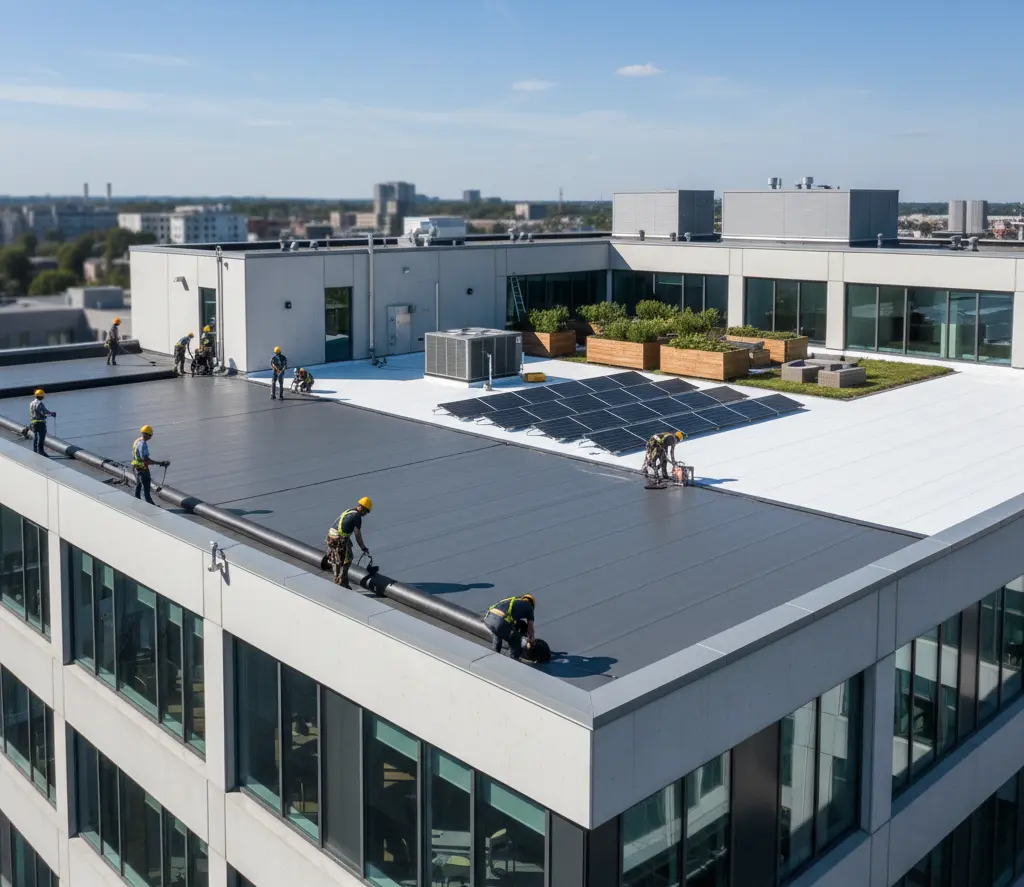
Flat roof installation is a common choice for many modern homes and commercial buildings because of its simple design and practical benefits. It offers easy maintenance, efficient use of space, and a clean, modern look. Understanding how a flat roof is installed, what materials are used, and how to maintain it properly can help homeowners and property owners make better decisions. In this guide, we’ll explain the key steps and important things to know about flat roof installation in a clear and straightforward way.
2. Understanding What a Flat Roof Is
A flat roof is a roof style that looks almost level but actually has a small slope to help water drain. The slope is usually less than 10 degrees. This type of roof is very common in modern architecture because of its neat and simple look. Flat roofs also make it easier to install solar panels, air conditioners, or even create a small rooftop garden. Many commercial buildings and modern homes prefer this design because it’s functional and easy to maintain.
3. How Flat Roof Installation Works
A proper flat roof installation follows a few key steps to make sure the roof stays strong and leak-free. It usually starts with preparing the roof deck by cleaning and leveling it. Next, a vapor barrier is added to protect against moisture. After that, insulation is installed to improve energy efficiency. The final layer is the waterproof membrane—usually made of materials like EPDM, PVC, or bitumen. Each part of the process is important to make the roof durable and weather-resistant.
4. Types of Materials Used for Flat Roofs
There are a few popular materials used in flat roof installation:
- EPDM Rubber – flexible, affordable, and long-lasting.
- TPO and PVC Membranes – great for reflecting heat and keeping buildings cool.
- Modified Bitumen – durable and works well for both homes and businesses.
- Built-Up Roofing (BUR) – made of multiple layers of asphalt and felt for extra protection.
The right choice depends on your budget, local climate, and maintenance preferences.
5. Step-by-Step Flat Roof Installation Process
Here’s a simple overview of how flat roof installation usually happens:
- Roof deck preparation – The surface is cleaned and made smooth.
- Adding insulation – Rigid foam boards are installed to keep the building energy-efficient.
- Laying the waterproof membrane – This protects the roof from leaks and moisture.
- Sealing and flashing – Edges and corners are sealed to prevent water from sneaking in.
- Final inspection and drainage setup – The roof is checked to ensure proper slope and water flow.
These steps help ensure the roof lasts long and performs well through every season.
6. Design Tips for Flat Roofs
Good flat roof design focuses on three main things—drainage, insulation, and accessibility. Even though it’s called a “flat” roof, make sure it has a slight slope to help water move toward the drains. Light-colored materials can help reflect heat and keep your building cooler. If you plan to use your roof as a terrace or sitting area, make sure it’s designed to handle extra weight safely.
7. Waterproofing Methods for Flat Roofs
Waterproofing is one of the most important steps in flat roof installation. Common waterproofing options include single-ply membranes like EPDM or PVC, or liquid coatings such as acrylic or polyurethane. These materials form a smooth, watertight barrier that protects the roof from rain and snow. Regular inspections will make sure the seams and edges stay properly sealed.
8. How to Keep a Flat Roof in Good Condition
Keeping your flat roof in good shape is simple but important. Clean off leaves and debris regularly, check for cracks or standing water, and clear the drains so water doesn’t collect. It’s a good idea to have your roof inspected once a year to catch any small problems before they turn into major repairs. Regular maintenance helps your roof last longer and saves money in the long run.
9. Common Flat Roof Problems and How to Prevent Them
Like any roof, flat roofs can develop issues over time. The most common problems include ponding water, small leaks, and blisters caused by trapped moisture. Sun exposure can also wear down roofing materials. The best way to prevent these problems is with routine cleaning, sealing, and yearly checkups. Taking care of your flat roof now means fewer surprises later.
10. Flat Roof Insulation Options
Good insulation makes a big difference in how well your flat roof performs. The most common insulation materials are rigid foam boards such as polyiso, EPS, or XPS. These materials keep your building warm in winter and cool in summer. Adding a vapor barrier underneath helps prevent moisture from collecting and damaging the roof. Proper insulation also reduces energy bills and keeps indoor spaces comfortable.
11. Why Drainage Is Important for Flat Roofs
Even though it’s called a flat roof, it still needs proper drainage. Without it, water can pool on the surface and cause leaks or structural damage. Most flat roof installations include drains, scuppers, or gutters that guide water away safely. The roof should have a slight slope built in so rain flows naturally toward those outlets. Regularly checking and cleaning your drainage system helps prevent future problems.
12. Advantages of Flat Roof Installation
There are many benefits to flat roof installation. It’s generally easier and quicker to install than a sloped roof. The design gives you extra usable space—perfect for solar panels, an outdoor lounge, or even a small garden. Flat roofs are also easier to access for maintenance and repairs. Their clean, modern appearance fits beautifully with today’s architectural styles.
13. Is a Flat Roof Right for Your Home?
Flat roofs are a great choice for homeowners who want a modern, space-efficient design. They work well in both residential and commercial settings. Before choosing one, consider your local weather, drainage setup, and maintenance needs. When installed correctly with the right materials, a flat roof can be both stylish and long-lasting.
14. Frequently Asked Questions About Flat Roofs
1. What is a flat roof and how is it different from a sloped roof?
A flat roof has a very low slope, almost level compared to traditional roofs. It gives buildings a clean, modern look and is easier to access for maintenance or adding solar panels.
2. How is a flat roof installed?
The process includes preparing the roof deck, adding insulation, and applying waterproof layers like rubber, PVC, or bitumen to keep it durable and leak-free.
3. What materials are commonly used for flat roofs?
Flat roofs are often made of EPDM rubber, TPO, PVC, modified bitumen, or built-up roofing (BUR), depending on climate and budget.
4. Are flat roofs durable?
Yes, when installed and maintained properly, they can last 20–30 years or even longer.
5. How do you keep a flat roof in good condition?
Regularly remove debris, check for standing water, and inspect edges for cracks. These simple steps prevent leaks and extend the roof’s life.
6. Why does drainage matter for flat roofs?
Even though flat roofs look level, they need a gentle slope or drainage system to keep water from pooling and causing damage.
7. What are the most common problems with flat roofs?
Water pooling, leaks, blistering, and cracks are common—but most can be avoided with regular maintenance.
8. Can you add insulation to a flat roof?
Yes, using rigid foam boards or other insulation materials helps control temperature and reduce energy costs.
9. Is a flat roof suitable for residential homes?
Definitely. Many modern homes use flat roofs for their sleek look and efficient use of space.
10. What are the main advantages of having a flat roof?
They’re cost-effective, easy to maintain, and provide extra usable space for solar panels, HVAC units, or a rooftop garden.