Key Takeaways:
- Asphalt shingle roofs in Pittsburgh typically last 15-25 years, while metal roofing can push 40-50 years if installed correctly. The freeze-thaw cycles here really accelerate wear compared to milder climates.
- Pittsburgh’s weather patterns – heavy snow loads, ice dams, and those brutal temperature swings – can shave 3-5 years off your roof’s expected lifespan. Spring storms and winter ice are particularly hard on shingles and flashing.
- Professional installation quality matters more than the material itself. A cheap roof installed by experienced contractors will outlast premium materials slapped on by weekend warriors every single time.
- Warning signs like curling shingles, granule loss in gutters, or dark streaks on your roof usually appear around the 12-15 year mark for asphalt. Catching these early can prevent expensive interior damage.
- Premium materials like slate or copper can last 75-100+ years in Pittsburgh, but you’re looking at 3-4 times the upfront cost. The math only works if you’re planning to stay in your home long-term or want that resale value boost.
What’s the real deal with different roofing materials?
Your choice of roofing material determines whether you’re replacing your roof every 15 years or forgetting about it for half a century. Asphalt shingles typically last 15-25 years in Pittsburgh, while metal roofs push 40-50 years and slate can hit 75-100 years. The price gap between these materials is massive, but so is the performance difference when you’re dealing with our freeze-thaw cycles and summer storms.
The basic asphalt shingles just aren’t built to last forever
Standard three-tab asphalt shingles are the most affordable option but also the shortest-lived. Pittsburgh’s temperature swings cause these shingles to crack and curl faster than in milder climates. Architectural shingles perform better and add 5-10 years to your roof’s lifespan, but you’re still looking at replacement before your 30-year mark hits.
Why metal and slate are actually worth the extra cash
Metal roofing costs two to three times more upfront than asphalt but rarely needs replacement during your ownership. Slate runs even pricier initially yet outlasts nearly every other material on the market. Both handle Pittsburgh’s weather extremes without the constant maintenance headaches that come with cheaper alternatives.
Metal roofs shed snow and ice effortlessly, which matters when you’re staring down a February nor’easter. They don’t absorb moisture, so freeze-thaw damage becomes a non-issue. Slate brings similar durability with a classic look that actually increases your home’s resale value. The real math works like this: you’ll replace an asphalt roof three or four times in the span one metal or slate roof lasts. Factor in labor costs for multiple installations, disposal fees, and the hassle of living through repeated roof replacements. That initial sticker shock starts looking like the smarter financial move when you break down the lifetime cost per year.
Honestly, Our Crazy Pittsburgh Weather Is the Biggest Factor
Pittsburgh’s wild temperature swings put serious stress on every roofing material. Your roof expands in summer heat and contracts during those brutal winter freezes, creating microscopic cracks that grow larger each season. The freeze-thaw cycle repeats dozens of times each winter, accelerating wear faster than in most other climates. This constant expansion and contraction shortens your roof’s lifespan by several years compared to more stable regions.
The Truth About What Ice Dams Do to Your Gutters
Ice dams form when snow melts and refreezes at your roof’s edge, trapping water that seeps under shingles. That trapped water causes rot in your roof deck and damages gutters beyond repair. Most Pittsburgh homes experience ice dam damage at least once during their roof’s lifetime.
Dealing with That Nonstop PA Humidity and Rain
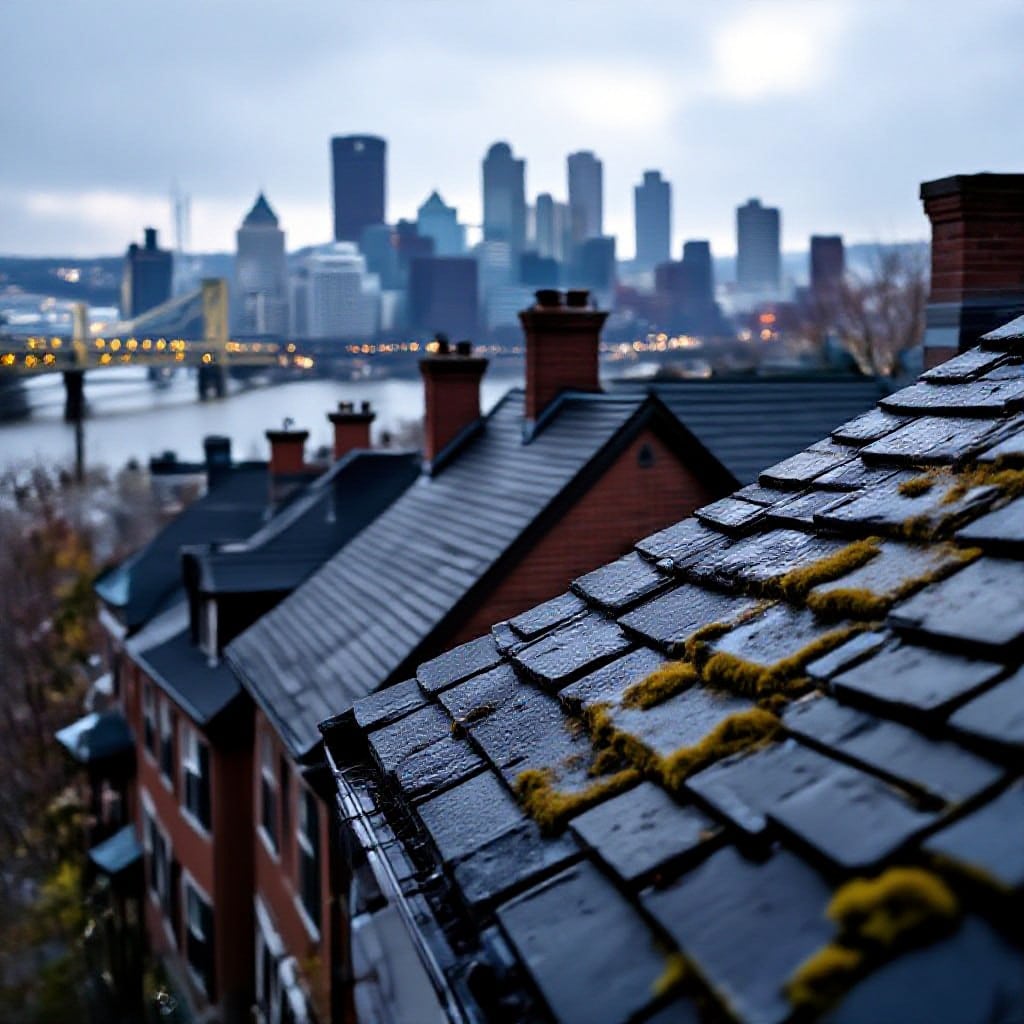
Western Pennsylvania gets around 38 inches of rain annually, and constant moisture creates the perfect environment for algae and moss growth. Your shingles stay damp longer than in drier climates, which accelerates deterioration and can void certain manufacturer warranties.
Moisture doesn’t just sit on your roof’s surface – it works its way into every vulnerable spot. Shingles that remain wet develop black streaks from algae, which aren’t just ugly but actually retain more heat and moisture. This creates a vicious cycle where damp shingles deteriorate faster, losing their protective granules years earlier than they should. Your attic ventilation becomes absolutely critical in this climate because trapped humidity from below meets external moisture from above. Poor ventilation combined with PA’s high humidity can cut your roof’s expected lifespan by 30% or more, turning a 25-year roof into a 17-year problem.
Why I seriously think your roofer’s skill matters most
Premium materials won’t save you if the installation is sloppy. A skilled contractor can make a standard asphalt roof last 25 years, while a hack job with top-tier materials might fail in 10. Flashing details, proper nailing patterns, and underlayment placement separate professionals from weekend warriors who’ll vanish when leaks appear.
Don’t ignore what’s going on with your attic ventilation
Your roofer should assess airflow before laying a single shingle. Poor ventilation traps heat and moisture, rotting your deck from underneath and voiding most manufacturer warranties. Ridge vents paired with soffit intake keep temperatures balanced and prevent ice dams that plague Pittsburgh homes every winter.
Here’s why skipping your yearly check-up is a bad idea
Annual inspections catch small problems before they become expensive disasters. Missing shingles, lifted flashing, and clogged gutters seem minor but accelerate deterioration fast. Most homeowners don’t climb ladders regularly, so damage goes unnoticed until water stains appear on your ceiling.
Professional inspections cost less than a nice dinner out but can save you thousands in emergency repairs. Roofers spot granule loss, seal breakdown around vents, and damaged step flashing that you’d never notice from the ground. They’ll also document your roof’s condition, which helps with insurance claims if storm damage occurs. Catching a failing valley before the next heavy rain means patching a few feet of material instead of replacing water-damaged drywall and insulation throughout your home.

How do you know if your roof’s seen better days?
Your roof won’t send you a text when it’s failing, but it’ll definitely leave clues. Missing or curling shingles, dark streaks running down your exterior walls, and granules piling up in your gutters all signal trouble brewing overhead. Daylight peeking through your attic boards? That’s not a feature.
What those missing shingles are trying to tell you
Bare patches on your roof mean water’s hitting the underlayment directly, and that layer wasn’t built to handle Pittsburgh’s freeze-thaw cycles alone. Each missing shingle creates a domino effect-wind catches the exposed edges of neighboring shingles, and before you know it, you’ve got a bigger problem.
What’s actually going on with those sagging spots and leaks
Sagging sections indicate structural damage to your decking or rafters, often from prolonged moisture exposure. Leaks rarely stay contained-they travel along beams and insulation, causing damage far from where you spot the drip. Brown water stains on your ceiling mean the problem’s been festering for weeks or months.
Moisture trapped in your roof deck creates the perfect environment for rot and mold growth, weakening the entire structure from the inside out. By the time you notice a sag, the wood’s already compromised and likely needs replacement, not just a patch job. Leaks also destroy your insulation’s effectiveness, which means your HVAC system works harder and your energy bills climb. If you’re seeing water inside your home, the actual damage in your attic and roof structure is probably three times worse than what’s visible.
Is it worth it to go for the pricey stuff?
Premium roofing materials typically deliver 20 to 30 years of extra lifespan compared to budget options. That extended performance means fewer replacements over your home’s lifetime, which translates to real savings when you factor in labor costs and the hassle of repeated projects. Higher-grade shingles also handle Pittsburgh’s freeze-thaw cycles better, reducing the chances of early failure. For more guidance on replacement timing, check out how often should a roof be replaced in PA.
My take on saving money in the long run with better materials
Quality materials cost more upfront, but you’re avoiding a second or third replacement down the road. Cheaper shingles might save you a few thousand now, yet they’ll fail sooner and leave you paying for another full installation in 15 years instead of 30. That math rarely works in your favor when you add up total ownership costs.
Why a fresh roof is a huge win for your home’s value
Buyers notice a new roof immediately, and it removes a major negotiation hurdle during home sales. Most people won’t touch a house with obvious roofing issues, so you’re expanding your buyer pool and protecting your asking price. Appraisers also factor roof condition into their valuations.
Real estate agents will tell you that a solid roof ranks among the top features buyers scrutinize during showings. You’re not just protecting the structure – you’re signaling that the entire property has been maintained properly. Homes with newer roofs sell faster and often command higher offers because buyers know they won’t face that expense for decades. The peace of mind alone makes your listing more attractive in a competitive market.
Final Words
Your Pittsburgh roof will last anywhere from 15 to 50 years depending on what you’ve got up there and how well you maintain it. Asphalt shingles give you the shorter end, while metal and slate push toward that half-century mark. Get a pro inspection every few years, fix small problems before they become big ones, and don’t ignore what our freeze-thaw cycles do to materials. That’s really all there is to it.
FAQ
Q: Does a roof in Pittsburgh really wear out faster than in other cities?
A: Yes, Pittsburgh roofs take a beating compared to most other regions. The freeze-thaw cycles here are relentless – we can see temperatures swing from below freezing to 50 degrees in a matter of days during winter and early spring. Every time water seeps into tiny cracks and then freezes, it expands and creates bigger problems. That cycle repeats dozens of times each year. The humidity doesn’t help either. Pittsburgh’s proximity to three rivers means moisture levels stay high, which accelerates deterioration of organic materials like asphalt shingles and wood shakes. You’re also dealing with legitimate four-season weather – scorching summer heat that bakes shingles, followed by ice and snow that sits on your roof for weeks. A 25-year architectural shingle in Arizona might actually last 25 years. That same shingle in Pittsburgh? You’ll be lucky to get 18 to 20 years out of it before you start seeing granule loss and curling.
Q: Can I extend my roof’s lifespan without replacing it completely?
A: Proper maintenance can add years to your roof’s life, sometimes as much as 3 to 5 years depending on the material. Start with annual inspections – spring and fall are ideal times. Clean your gutters religiously because backed-up water is one of the fastest ways to destroy roof edges and fascia boards. Trim back tree branches that hang over your roof; they drop debris, hold moisture against shingles, and create shaded areas where algae and moss thrive.
If you spot damaged or missing shingles, replace them immediately rather than waiting. One missing shingle can let water reach the underlayment, and once that’s compromised, you’re looking at rot in the decking below. Attic ventilation makes a massive difference too – proper airflow prevents ice dams in winter and reduces heat buildup in summer that literally cooks your shingles from below. Some homeowners in Pittsburgh apply algae-resistant treatments every few years, especially on north-facing slopes that don’t get much sun. These small investments beat the cost of a premature replacement.
Q: Should I file an insurance claim for storm damage or just pay out of pocket?
A: This depends entirely on the extent of damage and your deductible. If you’ve got a few damaged shingles from a windstorm, paying the $800 to $1,200 for repairs yourself often makes more sense than filing a claim. Insurance companies track claims, and even one claim can affect your premiums for years – sometimes raising them by 20% or more.
But if a severe hailstorm or fallen tree has damaged a significant portion of your roof, that’s when insurance becomes worthwhile. Get a professional inspection first before calling your insurance company. A reputable roofer can document the damage with photos and tell you honestly whether it meets the threshold for a claim. Most homeowner policies in Pennsylvania have deductibles between $1,000 and $2,500. If the repair estimate is $8,000 or more, filing makes financial sense. Just be aware that insurance companies send their own adjusters, and they’re trained to minimize payouts. Having your roofer present during the inspection helps ensure nothing gets overlooked. Some policies cover full replacement if damage exceeds a certain percentage of the roof’s surface area, which can save you tens of thousands of dollars.